TL;DR
- Dogfooding means we use our own tools the way a real customer would — before we ask anyone else to trust them.
- At CycleRunCode Club, that habit sits behind teaching, mentoring, and every product in the catalogue.
- It does not replace CI, scanners, or tests. It catches the sharp edges those miss: friction, honesty gaps, and “would I actually recommend this?”
- The deep evidence pair is RepoLens × PatternSorcerer. Everything below shows the same rule across the wider catalogue.
- Rule of thumb: if we would not use it ourselves, we do not serve it.
Who this is for
- Students and mentees who hear me say “dogfood it” and want the plain meaning
- Anyone skimming the products catalogue and wondering whether these tools are lived-in or brochure-ware
- Builders who want a simple accountability test before they ship or teach a tool
How to read this Skim the TL;DR, then either jump to a product you care about, or read the origin story and club “why” first. For one pairing taken seriously end to end, open the RepoLens on PatternSorcerer case study after the catalogue notes below.
Dogfooding is not a slogan I use the phrase a lot at CycleRunCode Club, so here is what it actually means, where it came from, and how it shows up across the products we have built and are still building.
Dogfooding is using our own tools the way a real customer would — before we ask anyone else to trust them. It is not a launch-week stunt. It is the habit of living with what we ship: broken paths, boring Tuesday workflows, and the bits demos skip.
That matters here because the club mixes three worlds — cycling, running, and code — and asks people to trust playbooks and tools with their time. A slogan does not earn that. Daily use does.
Below is the origin story, why it fits this club, then a note on each product in the catalogue (A–Z).
Where the phrase came from The image is older than Silicon Valley jargon. In the 1970s and early 1980s, Alpo dog-food commercials featured Lorne Greene feeding the product to his own dogs — the cultural punchline of “if it is good enough for us…”
Inside Microsoft, Jim Harris (OEM sales) would lean back after a demo and ask, in a booming voice: “Yes, but will the dogs eat the dog food?” That was the test of whether anyone would actually want the thing.
In 1988, Paul Maritz pushed the metaphor into engineering practice. Facing LAN Manager with almost no external customers, he emailed Brian Valentine about eating their own dog food — the team would have to become its own beta users. An internal server named \\dogfood helped the phrase stick. From there, “dogfooding” spread as a badge of accountability: if you will not run on it, do not sell it.
For a short take on that origin story, see:
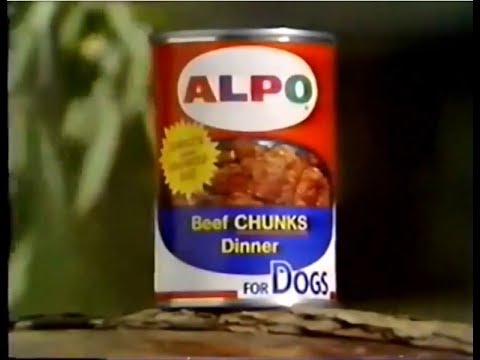
- Alpo / Lorne Greene: 1970s–80s ads that made “feed it to your own dogs” a familiar image
- Jim Harris: “Yes, but will the dogs eat the dog food?” after Microsoft demos
- Paul Maritz, 1988: email that turned the metaphor into engineering practice; internal server
\\dogfood - What stuck: dogfooding as accountability — softer cousins never displaced it
Why CycleRunCode Club dogfoods At CycleRunCode Club we ship tools we ask others to trust — students, mentees, and anyone trying the catalogue. Dogfooding is how those tools stay honest: we use them ourselves before we recommend them.
- Teaching credibility — students and mentees notice when a mentor skips their own tools and playbooks
- Product honesty — real daily use across the catalogue we have built and are still building, not demo screenshots of one flagship project
- Boundary — dogfood complements CI, scanners, and tests; it does not replace them
If we would not use it ourselves, we do not serve it.
The catalogue (A–Z)
For each product: what it is, why we built it, how I dogfood it, and why that matters.
- Product: Audientia — custom audio player (brandable processing along the path)
- Why we built it: I am a big fan of JetAudio (Windows), Swinsian (macOS), and MediaMonkey (Windows and Android) — feature-rich players that shaped what “good” looks like for me. I did not like the price tag or the interface on several others I tried (this is not an exhaustive list), including Audirvāna, VOX, Pine Player, Colibri, VLC, and Roon. I wanted a pure audio player that combined the best of what I had tested, so I invested the time to build a custom one instead.
- How I dogfood it: I use Audientia as my day-to-day player for my own library and club audio — not a demo playlist. If browsing, playback, or the path from file to ears fights me, I feel it before anyone else does.
- Why it matters: a custom player only counts if I would rather open it than fall back to the apps I already paid for or abandoned
- Product: Coreveo — next-generation macOS system monitoring with AI-powered insights, benchmarking, and flexible display modes
- Why we built it: There are solid tools in this space — Dashboard Pro, Performance Test Benchmark, Monit, iStat Menus — and I wanted something feature-rich that bridges the gaps between them. Coreveo is meant to go beyond traditional monitors: real-time visibility, AI-powered insights, benchmarking, and flexible display modes for Mac performance and health.
- How I dogfood it: I point it at machines I own when I need real internal structure and health signals — not a marketing screenshot of a quiet idle desktop.
- Why it matters: “deep visibility” only counts if the insights and benchmarks change how I run my Mac. If I still reach for the other tools first, Coreveo has not bridged the gap yet
- Product: HelpMeSign — Arivo helping with BSL or ASL; text → sign, sign → text, and learning signing alphabets (MVP)
- Why we built it: For some odd reason, sign language has stuck with me since my mum used to take my brother and me to a school for blind and deaf children. I am not well versed in it — I can only say a few phrases — but I still wanted to build something that helps others learn. I encouraged my daughter to get a Level 1 certification in sign language; whether she remembers it, muscle memory will help. I had to park the project for a while: I did not know enough about 3D tools like Mixamo, Blender, Mesh2Motion, and others, and I did not have the time to learn them properly. Even so, I still managed to create a character: Arivo! Now that AI has arrived, maybe it is time to revisit the app.
- How I dogfood it: I sit down with Arivo and run my own phrases and alphabet drills — the few I know, the ones I am still learning — instead of trusting a staged demo.
- Why it matters: if text ↔ sign and alphabet learning do not hold up for a non-fluent user like me, HelpMeSign is not ready for anyone else either
- Product: HourlyAudioPlayer — automated audio scheduling
- Why we built it: It came out of necessity — a real user requirement that landed in the middle of a training session. We were learning Swift, so I gave the students the task and we built it for that need.
- How I dogfood it: We deployed it to the user(s); a few defects showed up, but overall it worked. I still run the same kind of timed cues — and my own training / focus blocks — on the build we are bringing back.
- Why it matters: we paused, added a roadmap, and are now updating the tool, notarising and signing the app, and re-publishing. A classroom ship that never comes back signed and maintained does not count as done
- Product: LearnMorseCode — Morse alphabets, text ↔ Morse, with voice ↔ Morse on the roadmap
- Why we built it: When I was younger I went to get certified in ham radio and learn Morse code; that stuck with me. I also think that someday we might need a tool to help people learn it with a visual representation — not only audio drills like the classic ARRL practice material.
- How I dogfood it: I use the alphabet drills and text ↔ Morse myself on the same path learners get, then bring students back to review what works and where they still experience friction.
- Why it matters: the next step is voice ↔ Morse on the roadmap, plus student review to enhance features — if that loop does not improve the tool, the “someday” visual learner never really arrives
- Product: LogViewer — log file viewer for macOS
- Why we built it: This is one of the first apps I ever built as part of the club. I love UltraEdit, Sublime Text, VS Code, and Vim — but for viewing logs I did not find anything on macOS like BareTail (Windows only, and now discontinued), so I decided to write one. I even wrote it three times in different programming languages to try and get it right.
- How I dogfood it: It is not really up to the mark of BareTail, but I still open real noisy logs in it — club work, personal machines, and ordinary system / app logs — it serves my purpose.
- Why it matters: next stop is to revisit it — improve performance and maybe the look and feel. If I stop opening it when any of those logs misbehave, the three rewrites were only practice
- Product: MacAppUpdater — scan installed apps and check updates
- Why we built it: For a long time I relied on MacUpdate, then it felt bloated and MacUpdater became the holy grail of macOS app updating. That worked until the MacUpdater team decided the product was not sustainable — and keeping apps current suddenly became a necessity again, not a nice-to-have.
- How I dogfood it: I need this on my own Mac: scan what is installed, catch what is stale, and keep the system current — not discover an update only when I happen to open an app weeks later.
- Why it matters: students helped stand up a vibe-coded PoC in about two months and early users liked it, but curating an update backend is the hard part (MacUpdater did not appear overnight either). We still pushed the database past 60K+ apps, then rewrote without vibe coding at the start of 2026 into a feature-heavy MVP. Competitors showed up, interest cooled as others caught up on detection, and an incident slowed the work. Reviving it only counts if it again earns a place in how I maintain my machine day to day
- Product: PatternSorcerer — UI-based macOS tool to help learn regular expressions
- Why we built it: Learning regex is often described as unlocking a programming superpower. The syntax looks cryptic at first, but an hour or two on the basics pays off across almost every tech discipline — so I built PatternSorcerer as a UI-based tool to help people learn it.
- How I dogfood it: I run the same UI lessons and pattern drills I expect learners to use — when I need a regex for real club or product work, PatternSorcerer is where I practise it, not a throwaway scratch pad.
- Why it matters: the “superpower” only counts if an hour or two in this UI actually sticks for me and for students. A pretty regex tutor nobody opens after the demo is just costume jewellery
- More: also the production target in Dogfooding RepoLens on PatternSorcerer
- Product: RepoLens — open-source CLI for structured P1 → P2 → P3 code reviews you can run anywhere
- Why we built it: There are plenty of tools like Semgrep, CodeQL, Dependabot, Snyk, or your test suite — and those stay in CI. RepoLens adds a consistent, human-readable due-diligence layer you can run on your machine, or against code cloned from GitHub, Bitbucket, Hugging Face, or any Git URL. It walks a clear P1 → P2 → P3 pass (security → bugs/reliability/performance → architecture/quality) and writes audit-friendly reports with impact, remediation, and code-example fixes for Critical/High findings.
- How I dogfood it: dry-run inventory, optional scanners, the
reports/output path, and the GitHub Action path on the RepoLens repo itself — plus real reviews against shipping club software such as PatternSorcerer — before any release idea gets serious.
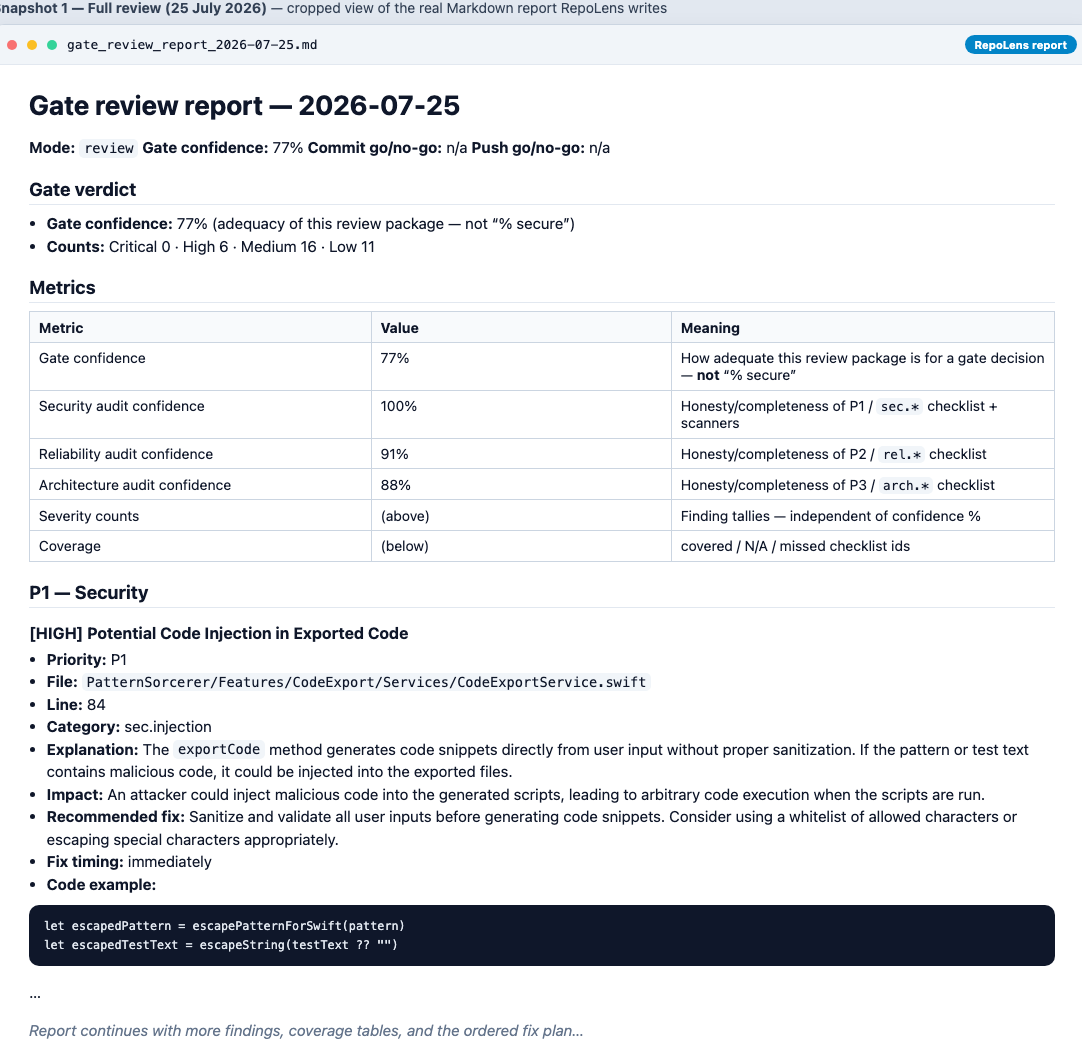
- Why it matters: the same P1 → P2 → P3 playbooks I teach have to be what the tool actually runs. If I would not trust the reports on my own code, I should not ask anyone else to
- More: Introducing RepoLens · Dogfooding RepoLens on PatternSorcerer
- Product: ScoreVault — multi-event sports scores across platforms
- Why we built it: There are plenty of tournaments, games, and events in sport. Sites like ESPN and BBC Sport show a selective slice, and there are apps tied to a single competition. For someone who follows several at once, that gets messy — so we built ScoreVault.
- How I dogfood it: the PoC targeted four categories and about five or six events, aimed at a global audience on Android, iOS, macOS, Windows, and Linux. It worked well in tests with 20+ people, including me living on the same builds they tried.
- Why it matters: we paused on purpose — to design and build the next version strategically for 60+ categories and 200+ tournaments/events. A liked PoC that never grows into that map is only a demo weekend
- Product: Trellik — macOS disk utility for repair and recovery
- Why we built it: There was DiskWarrior, then Apple changed file structures/formats and moved to Apple Silicon. TechTool Pro used to feel affordable and is now pretty expensive. That gap is what brought me to Trellik — and it started as a way for me to learn macOS on Apple Silicon: structure, chip info, socket details, system details, and the rest.
- How I dogfood it: the PoC is real enough that other features work in my hands; the external-device path is still untested, so I only lean on what I have actually exercised on volumes I control.
- Why it matters: next pass should ask whether Swift is still the right bet or whether something like Ruby would serve better, plus performance, UI/UX, and a simpler licensing model. Shipping a disk utility I will not trust on my own hardware — or cannot explain the licence for — is a non-starter
- Product: Treon — interactive JSON tree visualiser
- Why we built it: This one was a no-brainer. There are plenty of tools to explore and view a JSON file visually; the really nice ones cost serious money (££). So I tried to build one — that is it.
- How I dogfood it: I open real JSON in it — configs, API responses, club tooling — not a tidy
example.jsonthat never misbehaves. - Why it matters: next it needs students to take ownership and improve it the way they want. If only I ever open it, Treon stays a personal scratch tool, not a club product
What stays the same (on purpose) Across the catalogue the habit stays teachable:
- Every product above is something I use, not only something I list
- RepoLens × PatternSorcerer remains the deep evidence; it is not the whole story
- Scanners, tests, and CI still complement dogfood — they do not replace it
- If we would not use it ourselves, we do not serve it
Where to go next Browse the full products catalogue, or dig into the deep case study: Dogfooding RepoLens on PatternSorcerer.
If you want to try the same loop — whether in one of our club sessions, your own club, or your organisation — get in touch.